

70% of Australians won’t have enough super to retire*
The best time to plan for retirement isn’t “eventually,” it’s now. Most Australians wait until they’re well into their working life to think about it seriously, by which point they’ve missed years, sometimes decades, of compounding growth. Wealth creation runs on time, not effort, so the earlier you start, the further ahead you’ll be with far less strain later.
Not sure where you actually stand? Our free retirement planning spreadsheet gives an idea of how much you may need in numbers, in a few minutes.
*According to a recent study by the Association of Superannuation Funds of Australia. See source below.

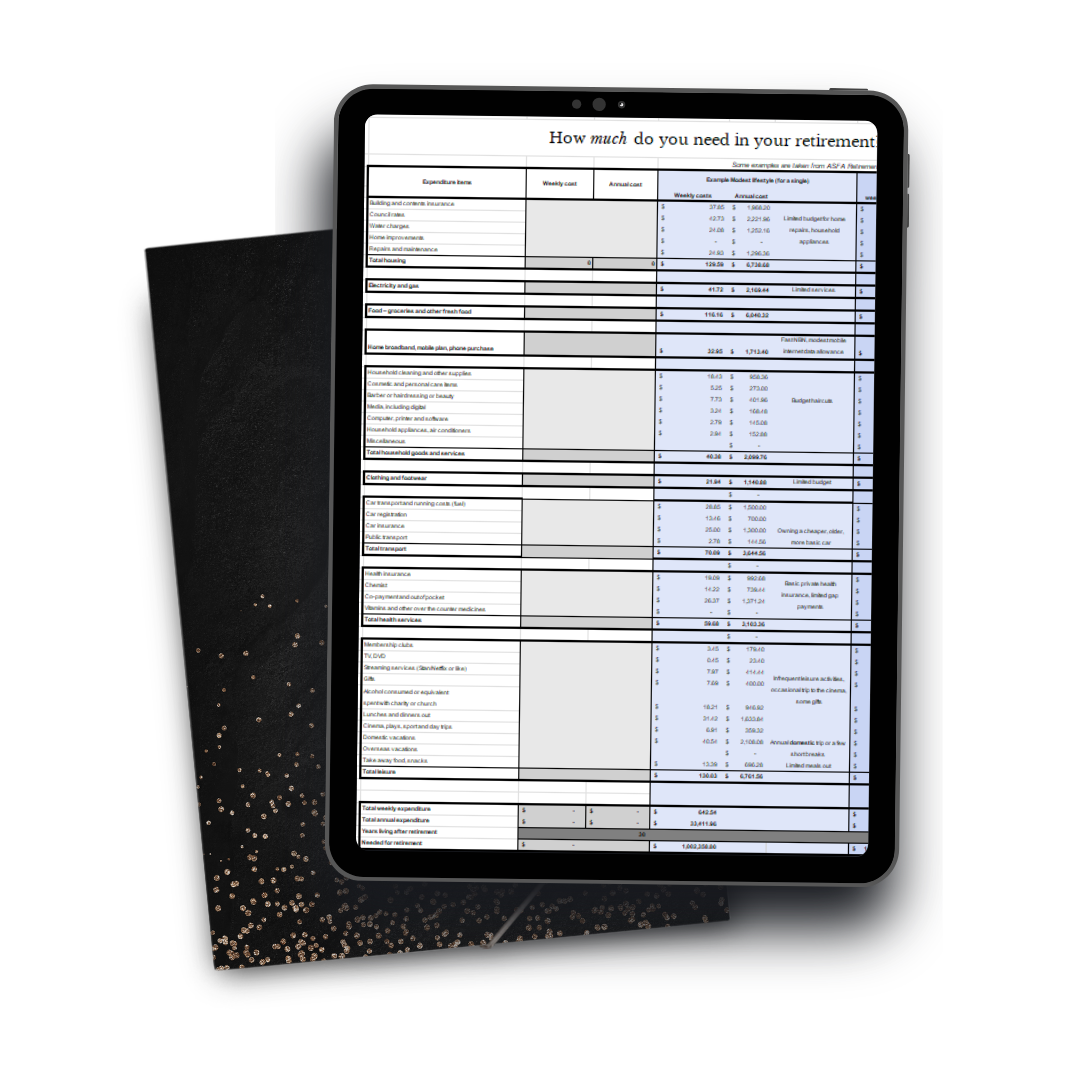
What’s included in the free retirement planner
A simple, no-strings tool built to show you exactly where you stand.
- The ASFA comfortable retirement benchmark, so you have a trusted starting point
- Space to add your own living expenses, from everyday costs to the extras you actually want in retirement
- Weekly and annual cost breakdowns, so the numbers feel real, not abstract
- A personalised estimate of what you’ll actually need, based on your own numbers, not someone else’s average
Pop in your details and it’s yours, free.
Things to consider when planning for retirement:
- Timing: at what age would you like to leave the workforce? If you invest well, you can bring down your retirement age considerably by building wealth.
- Lifestyle: as mentioned above, paint a mental picture of how you’d like to spend your time. A clear picture is what keeps you motivated to hit financial freedom, even ahead of schedule.
- Income and living costs: a simple budget shows you what you’re actually spending and where you can redirect towards your future.
- Plan for the future: property, shares, bonds and extra super contributions all build your retirement foundation. A property investment specialist can help you get the structure right.
Fact: Australian women have about 25% less super than men.
With hurdles like maternity/parental leave and the 11.5% pay gap (currently) experienced by women in Australia, it is a much harder task to achieve the right amount of super needed to live out your plans. If you are a mid to high-earning individual, or you have equity in your current home, you might be in the perfect position to start investing in property and establish the foundation for future wealth and build it quickly.
At Locale Wealth, you can talk to women who’ve done exactly this, built property portfolios and set their retirement up on their own terms.
Speak to one of them today.
Get your free retirement planner
Start retirement planning today!
Information here is general and doesn’t account for your personal circumstances or finances. Speak with a professional about what you can afford, tax implications and potential rental income.
Sources:
*https://www.superannuation.asn.au/consumers/retirement-standard/