

When an area is labelled the next property hotspot, it is fair to wonder whether you are looking at a genuine opportunity or a well-presented sales pitch. Both can come with impressive charts.
The real question is whether people will still want to live there in five, ten or fifteen years. To assess rental demand before buying an investment property, you need to look at how the market is performing today, then work out what could keep drawing people to the area in the years ahead.

That means checking vacancy rates, rents and competing listings, but also looking past the property market. Population, jobs, transport, schools, healthcare, development plans and the way people live all influence demand.
Locale Wealth researches investment areas at a national, regional and local level. We look for several fundamentals supporting the same conclusion, then assess whether the property itself suits the people likely to rent it and the client’s wider strategy.
In this article
- The short version before we get into the data
- Why rental demand matters
- Start with what the rental market is doing now
- Find out who will create tomorrow’s demand
- Check the economic foundations
- Look at the infrastructure people will actually use
- Do not overlook liveability
- Read the plans, then check what is real
- One promising statistic is never the whole story
- How Locale Wealth researches investment areas
- Questions worth asking before you commit
- Frequently asked questions
- Choose the area for the years ahead
The short version before we get into the data
- Vacancy rates, leasing times and achieved rents show how the rental market is behaving now.
- Population growth only helps when the right people are moving in and housing supply does not race ahead of them.
- Stable employment and a mix of industries can support demand through changing economic conditions.
- Transport, schools, hospitals, shops and green spaces can make an area easier to live in and harder to leave.
- Future development can improve an area, create too much competing housing or, occasionally, manage to do both.
- The property must suit the local tenant market. A strong suburb cannot rescue the wrong dwelling at the wrong price.
Why rental demand matters
Rental demand affects how easily you may find a tenant, how much rent the market can support and how long the property could sit empty between leases. Strong demand can support steadier income, but the reason behind it matters just as much as the headline number.
Every vacant week has a cost. Loan repayments, rates and insurance keep arriving with admirable punctuality, even when the rent does not. Demand for an area also does not guarantee demand for every home within it. A poorly matched property can sit vacant in a popular suburb.
Start with what the rental market is doing now
Current market data gives you a useful first reading. Think of it as the vital signs, not the full diagnosis. Vacancy rates, available listings, leasing times and achieved rents work best when you compare them together and follow the trend over time.

Vacancy rates
A vacancy rate measures the share of rental properties sitting vacant in a market. A low rate can mean renters have fewer homes to choose from and face more competition for suitable properties.
The direction matters too. A low but rising rate may show that supply is catching up, while city-wide figures can hide sharp differences between suburbs and property types.
This is where the tempting conclusion needs a pause. A low vacancy rate is nice to see, but it cannot tell you whether a large wave of new housing is coming, a major employer may leave or local renters can keep absorbing higher rents. There is no magic percentage that settles the argument on its own.
Rental listings and leasing times
Active listings show how much choice tenants have. Look at whether comparable homes stay online for weeks, reduce their asking rent or disappear after the first inspection.
Comparable is the important word. Demand for a four-bedroom family home says little about demand for a one-bedroom apartment across the same suburb. Property markets have a habit of making broad averages look more helpful than they are.
Advertised rent and achieved rent
An advertised rent is what the owner hopes to receive. Achieved rent is what a tenant agreed to pay. Those figures can part ways when a market changes or an estimate was optimistic from the beginning.
An independent rental appraisal can test the estimate against similar local properties, accounting for the home’s design, condition, features and exact location.
Recent sales and rental yields
Recent sales show how buyers value the area today. Rental yield shows the relationship between purchase price and rent, which makes it useful for comparing opportunities.
Yield still needs context. A high gross yield may reflect weaker employment or other local risks, and it excludes management fees, rates, insurance, maintenance and vacancy. Attractive percentages rarely volunteer their footnotes.
Find out who will create tomorrow’s demand
Demographic research tells you who lives in an area, who is moving there and what sort of home they need. The aim is not to find a property you would personally choose. It is to find one that makes sense for the local tenant market.
Population growth and new households
Population growth can support rental demand, but more residents do not automatically mean every property type will benefit. You need to know the ages, incomes and household sizes of the people arriving, where they are settling and how many will rent.
Household formation matters as well. Young adults leaving family homes create different demand from couples having children or older residents downsizing. The property type needs to follow the people, while supply must be checked to see whether developers are already meeting that demand.
The local tenant profile
Families may want more bedrooms, outdoor space and access to schools. Healthcare workers may value a manageable trip to a hospital. Young professionals may prioritise transport, employment and nearby services.
Matching the property to the tenant profile can broaden the pool of renters. A home designed for a narrow audience may take longer to lease when conditions change.
Rental affordability
Demand still depends on what local households can afford. Compare rents with household incomes and wage levels. If rents rise far faster than earnings, tenants may move to nearby suburbs, share a home or choose something smaller.
Fast rental growth may look encouraging in a spreadsheet. It becomes less impressive if the people expected to pay it are already at their limit.
Check the economic foundations
Jobs bring people to an area and help them stay. Research should cover employment growth, major employers, business activity, workforce diversity and access to employment centres.
Check whether jobs are permanent, seasonal or tied to one project. A proposal without funding or a delivery timetable is not the same as an operating hospital, university or commercial precinct.
Areas supported by several industries may be more resilient than locations dependent on one employer or economic cycle. That does not rule out single-industry markets. It means the risk needs to be understood rather than politely ignored.
Understand the local economy before you invest.
Speak with a Locale Wealth investment partner about the jobs and industries supporting an area, and the risks that could affect long-term rental demand.
Look at the infrastructure people will actually use
New infrastructure can improve daily life, but confirm whether a project is proposed, funded or under construction before giving it too much weight.
Transport connections
Train stations, road upgrades and bus routes can reduce travel times and connect residents with more jobs. The exact location still matters. Being near a station can help; being close enough to hear every train may be less charming.
Schools, hospitals and community services
Schools, hospitals and childcare can make an area more practical and may create jobs. Their value depends on the tenant group. A new primary school means more to a family-focused area than a precinct dominated by small apartments.
Commercial and employment centres
Shopping centres, offices and industrial precincts may improve access to services and create jobs. Check the development stage, completion timeframe and committed occupants. A colourful masterplan is a starting point, not a set of keys.
Do not overlook liveability
People choose homes around the life they want to lead. Parks, shops, schools, healthcare and reasonable travel times can help an area retain tenants. Liveability should mean something specific: can residents reach work, buy groceries and use local parks without turning it into a project? A green patch on a map only helps if people can access it and want to spend time there.
Read the plans, then check what is real
Local planning strategies, structure plans and government programs can show how an area may change. They may reveal new transport, schools, employment areas, land releases, zoning changes and higher-density development.
Plans can change, so check approvals, funding and delivery stages. Construction deserves more confidence than an idea with no firm date.
Future housing supply
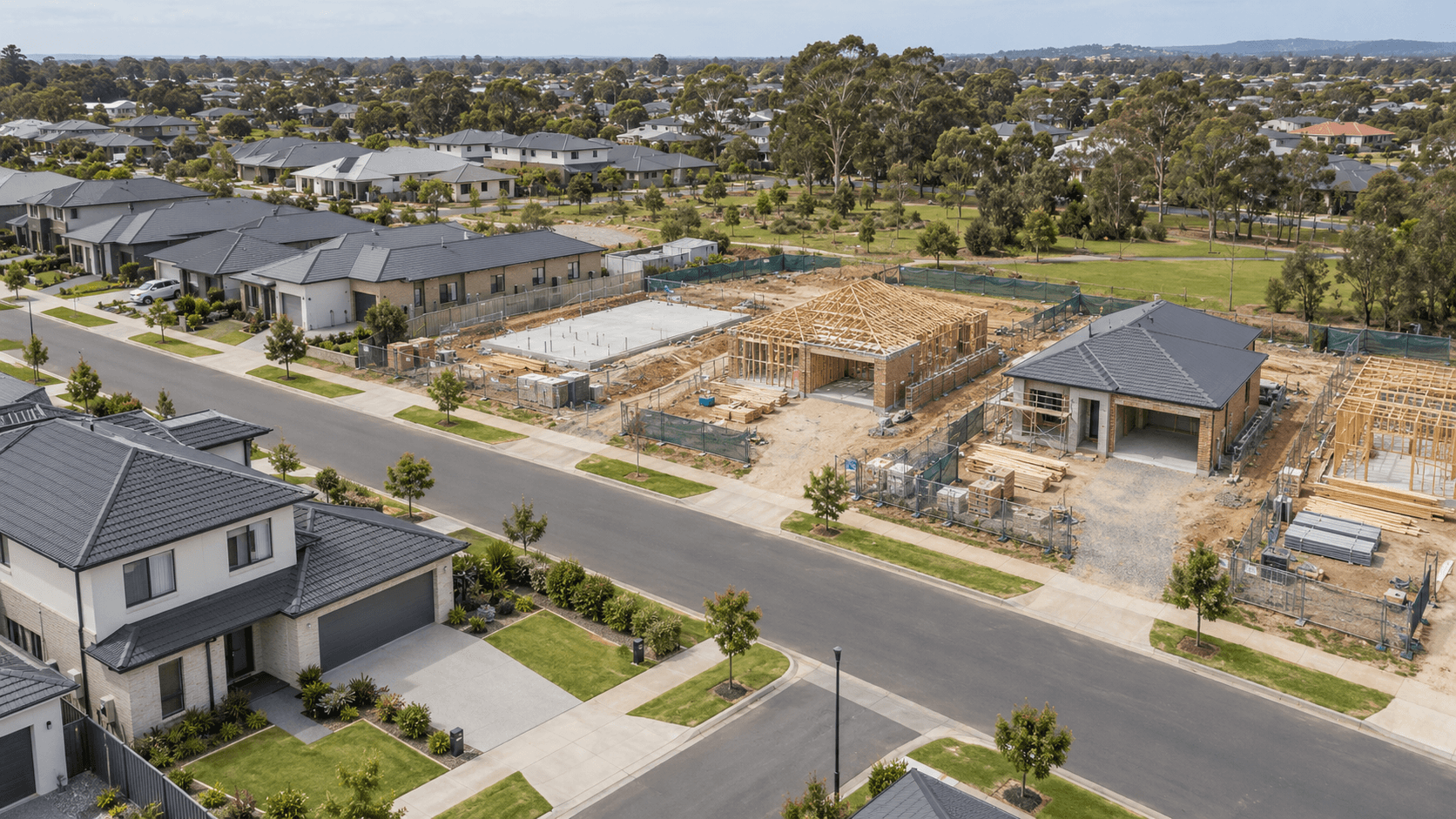
Population growth only supports demand when new housing does not outpace the households arriving. Review the pipeline of land, apartments, townhouses and build-to-rent developments, along with when they may reach the market.
The type of supply matters. Hundreds of apartments may have little effect on demand for family homes. A large release of similar house and land properties could create direct competition for tenants and future buyers.
The other side of development
Development can also bring oversupply, noise, congestion, lost open space or services that fail to keep pace with population growth.
Good research does not treat every crane as a sign of prosperity. It asks what is being built, who needs it and what the area may look like when the work is finished.
One promising statistic is never the whole story
A low vacancy rate, high yield or recent price rise can catch your eye. Each describes one slice of the market, and none can carry the decision alone.
A low vacancy rate may sit beside thousands of approved homes. Population growth may occur without enough jobs, while a high yield may compensate investors for risks hidden behind the percentage.
Locale Wealth looks for several fundamentals pointing in the same direction. We assess rental demand, population, employment, infrastructure, liveability and supply together, along with the factors that could weaken the case. Research cannot guarantee performance, but it can stop one flattering number from doing all the thinking.
How Locale Wealth researches investment areas
Our investment partners begin with economic conditions, population movement, employment, housing supply and government investment. We then move closer, studying sales, rents, vacancy rates, demographics, local employers, infrastructure and future development.
A promising area does not make every property within it suitable. We assess the dwelling type, land, layout, expected rent, total cost and likely competition. We then consider how the opportunity fits the client’s finances, goals, comfort with risk and personalised investment plan.
Locale Wealth researches opportunities across Australia and is not tied to one developer, builder, agent or location. Our job is to explain why an area is being considered, what may support it and where the risks sit, so you can make a decision with your eyes open.
Questions worth asking before you commit
- Are vacancies low because of lasting demand or a temporary shortage?
- Who rents locally, and what type of home do they need?
- Are population growth and employment moving in the same direction?
- Which infrastructure projects have funding and realistic delivery dates?
- How much competing housing is planned?
- Can local households afford the expected rent?
- What could weaken demand, and does the opportunity still fit your strategy?
Look for evidence behind each answer. Sales material can be useful, but it should not be asked to mark its own homework.
Frequently asked questions
Choose the area for the years ahead
Vacancy rates, leasing activity and rental yields show how an area is performing today. Population, employment, infrastructure, liveability and future supply help explain what may support demand tomorrow.
The best decisions come from weighing those factors together and understanding the risks, rather than chasing the latest suburb list or one impressive statistic.
Locale Wealth researches markets, local areas and individual properties before you commit. We interpret the data, investigate the risks and consider how each opportunity fits your long-term personalised investment plan.
See how we research investment areas.
Speak with a Locale Wealth investment partner about the research and due diligence behind selecting an area for your property investment strategy.
This article provides general information only and does not constitute financial, tax, legal or investment advice. Property values, rental income and market conditions can change, and past performance does not guarantee future results. Seek advice from appropriately qualified professionals before making an investment decision.