

You’ve worked hard to build your financial position, and you want your next investment to support your future without putting too much pressure on your everyday budget.
A property that earns enough rent to cover its expenses, with money left over, can be an appealing option.
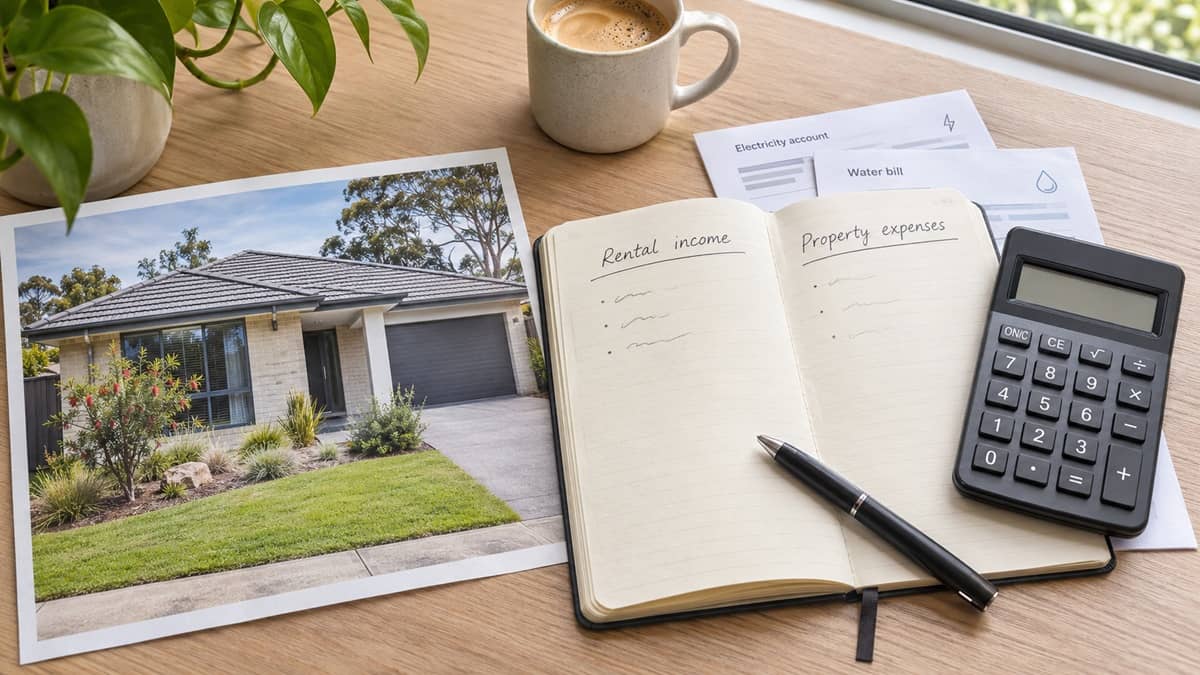
This is known as a cash flow positive property.
It means the rental income exceeds the property’s operating and finance costs over a given period.
The calculation is straightforward:
Rental income − vacancy allowance − operating expenses − finance costs = cash flow before tax
The important part is understanding what goes into those numbers.
In this article
Quick summary
- A cash flow positive property earns more rent than it costs to hold over the period being assessed.
- The Melbourne co-living example produces an estimated $17,134 annual surplus before tax under the stated assumptions.
- Rental income, vacancies, interest rates, expenses and the loan structure can all change the result.
- You do not need a particular salary, but a lender will assess your income, debts, available cash or equity and ability to manage the costs.
To show how the numbers can work in practice, let’s look at an illustrative Melbourne co-living property.
Cash flow positive property example: Melbourne co-living
Imagine you’re considering a six-bedroom, six-bathroom co-living property in Melbourne.

Each room is expected to rent for $350 a week, including shared household expenses.
Here’s how the estimated costs and income could look once the property is completed, approved and fully operational.
Property and finance assumptions
| Item | Amount |
|---|---|
| Land and construction | $830,000 |
| Loan amount (80%) | $664,000 |
| Interest rate | 6.75% |
| Loan structure | Interest-only |
| Weekly rent per room | $350 |
| Vacancy allowance | 8% |
| Estimated upfront cash or usable equity | $227,070 |
The upfront contribution includes $166,000 towards the land and construction, plus an estimated $61,070 for transfer duty, acquisition and compliance costs, and furnishing.
Actual costs and finance arrangements will depend on the property and your circumstances.
Estimated annual cash flow
| Income and expenses | Annual amount |
|---|---|
| Gross rental income | $109,200 |
| Less 8% vacancy allowance | −$8,736 |
| Effective rental income | $100,464 |
| Operating expenses | −$38,510 |
| Loan interest | −$44,820 |
| Estimated cash flow before tax | $17,134 |
| Estimated weekly surplus | $329.50 |
Under these assumptions, the property could generate approximately $17,134 a year in positive cash flow before tax.
That’s around $329.50 a week.
The operating expenses include property management, insurance, council and water rates, maintenance, land tax, utilities, cleaning and estimated co-living compliance costs.
The example assumes a full year of rental operations after construction. It excludes construction-period holding costs and uses interest-only finance, so principal repayments are not included in the surplus.
What could affect the cash flow?
The estimated surplus depends on rental income, occupancy, interest rates and ongoing expenses.
A few changes can make a meaningful difference.
Rental income and vacancies
If each room rents for $20 less per week, potential annual rent falls by $6,240. Longer vacancies would also reduce income.
Interest rates
A one percentage point increase on the $664,000 loan would add $6,640 in annual interest.
If all other assumptions remained unchanged, the estimated surplus would fall to approximately $10,494 a year before tax.
Operating costs
With six residents, utilities, cleaning, maintenance and tenant turnover can affect expenses. The property may also require specific registration, safety and compliance measures, depending on its classification.
Loan structure
The example uses interest-only repayments. Moving to principal-and-interest repayments would increase the cash required for loan payments while reducing the outstanding debt.
If you’re considering a new-build property, construction delays and additional costs can also affect your overall investment position.
These are useful scenarios to test before deciding whether a property fits your budget.
Cash flow, rental yield and gearing
Positive cash flow is the money left after rental income, vacancies, operating expenses and finance costs are accounted for over a set period.
Rental yield is different. It compares rental income with the property’s value or purchase price and usually does not include every holding cost. Positive gearing is a tax term used when deductible rental income exceeds deductible expenses. A property may have a strong rental yield without producing positive cash flow once all expenses and loan costs are included.
Is a cash flow positive property right for you?
Positive cash flow can help reduce the ongoing contribution required from your regular income.
You’ll also want to consider the property’s long-term potential.
That includes local rental demand, housing supply, employment, population growth, building quality and resale appeal.
A specialised co-living property may attract a different group of tenants and future buyers from a standard residential home. Understanding that market is part of assessing the opportunity.
Your borrowing capacity matters too.
There’s no universal salary requirement for investing in a cash flow positive property. A lender will assess your income, expenses, existing debts, available cash or equity and the proposed investment.

You’ll also need enough funds for the upfront contribution and a buffer for vacancies, repairs and unexpected costs.
The right strategy depends on what you want the property to achieve and the financial commitments you’re comfortable managing.
Build a property strategy around your goals
At Locale Wealth, we start by understanding your goals, finances and timeframe.
We help you develop a tailored property investment strategy, research opportunities and assess how each property could support your longer-term plans.
For cash flow focused investments, that means looking closely at rental evidence, operating costs, local demand and the risks involved.
Ready to explore your investment options?
Talk to a Locale Wealth investment partner about what may be possible for you.
General information only. The Melbourne example is illustrative and based on stated assumptions. Actual rental income, expenses, finance terms and investment outcomes may differ. Property investment involves risk, and returns are not guaranteed. Seek advice from appropriately qualified professionals before making financial, lending, tax or legal decisions.
Sources
- Moneysmart, Buying a house
- Moneysmart, Save for a house deposit
- Consumer Affairs Victoria, Running your rooming house business
- Consumer Affairs Victoria, Rooming house minimum standards
- Consumer Affairs Victoria, Gas and electrical safety obligations
- Australian Taxation Office, Residential rental properties
- Australian Taxation Office, CGT concessions